Tuesday, June 3, 2014

Brampton couple reunited with $50M lottery ticket lost at church

Brampton couple reunited with $50M lottery ticket lost at church


A Brampton couple endured a roller-coaster ride of emotions when a lottery ticket worth $50 million went missing only to be found and returned by a person at their church.

A Brampton couple endured a roller-coaster ride of emotions when a lottery ticket worth $50 million went missing only to be found and returned by a person at their church.

Hakeem Nosiru won the Jan. 17 Lotto Max draw and was one day away from claiming the money when the ticket, which he duct-taped to the inside his wife’s purse for safekeeping, was missing after they attended church.
That sparked a frantic search of their Brampton home, with garbage bins being upended and their contents picked through piece by piece, an effort that left Nosiru and his wife empty handed and feeling “miserable.”
But that despair turned to joy after a fellow member of the congregation discovered the ticket and reunited it with them on April 1 — saying “April fools” — a return made possible because Nosiru signed the ticket with their address.
But the saga wasn’t over yet, as Nosiru gave the ticket to Ontario Provincial Police, who were investigating the matter for Ontario Lottery and Gaming to ensure there were no further snags.
Everything checked out and Nosiru and his wife Abiola were beaming for the cameras at the OLG prize centre Monday, telling reporters they were planning on travelling the world and helping out their family.
Abiola Nosiru said that when she realized her husband’s winning ticket had disappeared from her purse “I had a fly in my stomach and I couldn’t sleep for days. I couldn’t eat. I was devastated.”
“We just wanted to see the reality. And the reality is right here now,” she said, fighting back tears.
She wasn’t sure what they’ll do for the woman who ended the ticket’s exodus, but told her “I just want to say thank you.”

Ontario Are Hydro prices really so high? Damn Yes!

Are Hydro prices really so high? Letter May 25
Yes, Hydro prices are very high! Rob Graham’s letter conveniently leaves out a few facts about hydro rates.
In March, 1999, when Ontario Hydro and municipal utilities were turned from non-profit commissions into forprofit corporations and the Tories brought in hydro deregulation, the price was 4.3 cents a kWh. The top rate is now 12.9 cents, a 300-per-cent increase. During that time, inflation ran at about 30 per cent, so the price of electricity rose at 10 times the rate of inflation.
Also, this isn’t the real price of hydro. We have a deregulated electricity market (designed by Enron and their friends) now called the Independent Electricity System Operator. The market rate during the cold snap in March was 24.9 cents. The reason why most people are unaware of this market is because the price remains hidden with the Ontario Energy Board truing up rates twice a year. You guessed it, upward.
Also, $1.5 billion is now taken out of Ontario’s economy in private power profits every year. Before deregulation those profits were returned to businesses and citizens in the form of lower and stable rates under at-cost, nonprofit, public power.
We pay double what they pay in Manitoba and Quebec. The price of electricity in Ontario is only going to go way, way up. Why? Because of Hydro deregulation and privatization. Are Hydro rates really so high? Damn right they are!

Sunday, June 1, 2014

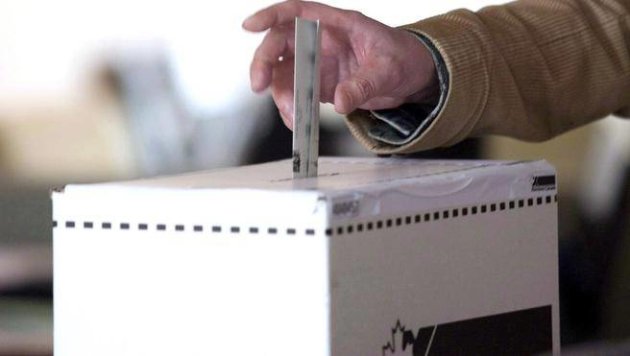
Ontario Elections voters have the legal right under section 53 of the Elections Act to decline their ballot (i.e. vote “none of the above”) and have it counted separately from a spoiled ballot.


In a statement released on Wednesday, Democracy Watch asked Elections Ontario — by threat of court action — to advertise the fact that voters have the legal right under section 53 of the Elections Act to decline their ballot (i.e. vote “none of the above”) and have it counted separately from a spoiled ballot.
[Section] 53. An elector who has received a ballot and returns it to the deputy returning officer declining to vote, forfeits the right to vote and the deputy returning officer shall immediately write the word “declined” upon the back of the ballot and preserve it to be returned to the returning officer and shall cause an entry to be made in the poll record that the elector declined to vote.
R.S.O. 1990, c. E.6, s. 53.”
In an interview with Yahoo Canada News, Democracy Watch's Duff Conacher said that if Elections Ontario did advertise that option — as part of their outreach materials — voter turnout would indeed increase.
"There are some people who don't support any party that has a candidate in their riding or do not support any of the parties' platforms," he said.
"They may go and spoil their ballot but when you spoil your ballot nobody knows whether you're stupid or you're doing it intentionally. And that's why you have a right to decline your ballot...so you can go and vote none of the above."
[ More Ontario election coverage: First attack ads largely miss the mark: expert ]
In the future, Conacher would like to see new regulations so that ballots actually have a line that explicitly says "None of the Above" and space for voters to explain their reason for selecting that option.
"I think a lot of them would say 'don't like the voting system' or 'can't be held accountable for broken promises,'" Conacher said.
"Why not track that if you really want to know why people aren't voting for any one party?"
For their part, Elections Ontario says that their online guide and a poster of voters rights — which will be placed at every polling location — include "mentions" about the right to decline. They also note, however, that increasing voter turnout isn't necessarily just their responsibility.
"Political parties, candidates, interest groups, media and the voters themselves all have a role to play in increasing participation in our provincial elections," Andrew Willis, a communications coordinator for Elections Ontario, said in an email to Yahoo.
"We are a non-partisan agency and as such, our role is not to get individuals to vote. Rather, we facilitate the vote – and, if one chooses, the right not to vote."
What do you think? Would a 'none of the above' option entice more Ontarians -- and more Canadians -- to vote in elections?
(Photo courtesy the Canadian Press)